piss up in a brewery........
Been doing some other stuff today, but while that's getting on with itself, I decided to start racking off anything that's being kept.
Why ? well it's because I've still got about 14 litres of Chenin blanc grape concentrate and I don't want it to go to waste - oxidisation and all that.
So the master plan (yes, another one), is to use it (the Chenin Blanc) to top up the Lavender honey and the Orange Blossom honey meads made last year (april 2009) after I've racked them off the sediment (damn, I'm sure I wrote about the makings somewhere but I'm buggered if I can find it - so I don't know what yeast I used to make them with).
Then I'm also gonna try and freeze 2 x 2 litre bottles of the Chenin Blanc concentrate.
I'm also planning on making a pyment, Chenin Blanc concentrate and a jar of the Polish honey. Not decided what yeast to use yet......
Then just see how much of the concentrate is left and take it from there........
What else have I done recently ? Oh yes, did I mention that I dug out all my current stocks, had a little taste of each and any that weren't showing any signs of promise have all been put through a friends still.
I'm not gonna waste them and just put them down the sink am I! I'll use the alcohol to fortify anything that's getting kept, but has gone below the predicted strength when it's been racked and then topped up with water, grape juice or concentrate.
Then they'll probably just go straight back under the stairs to bulk age (for bulk age, read that as leave them until I can make my mind up to bottle them or at least have another look at them to decide what's gonna happen next.....)
pip pip!
Saturday, February 13, 2010

Saturday, February 06, 2010
More "Rubbish" wine......
So, despite my relative pleasure at learning that the Chenin Blanc concentrate is good for back sweetening, I'm absolutely fucking stumped as to what else I might be doing wrong.........
On top of the 8 gallons I checked last week, to find that about half of it is worth keeping, this weekend, I've just worked my way through 17 gallons of different fruit wines only to find that 6.5 gallons of it are worth keeping for either bottling, or further modification (back sweetening etc). The other 10.5 gallons will go the way of the rest of it.....
I don't know what it is that I'm doing wrong... I don't seem to ever using sub-standard ingredients. I haven't had a stuck fermentation for a long time i.e. it all seems to "finish" as expected.
It's just that it tastes, for the main part, bloody horrible.
I can't fathom out, whether it's to do with unrealistic expectations, or whether it's false memories of how the "country wines" of yester-year tasted ???
Gales, the brewery in Horndean (north of Portsmouth), used to make a range of country wines and my memories of those were basically fruit flavoured cordials but with an alcohol content.
My fruit/country wines taste fuck all like that....
I think my hygiene processes are ok. I think my technique is Ok (all the wines are basically made in the same way - just the variation of ingredients). I'm no expert, but I don't think that any of the ingredients I've tried are bad, they might not be "top quality" (a few of the flavours/recipes have been "opportunistic"....), but they certainly aren't rubbish......
Fuck, fuck, fuck! What is it that I'm doing wrong..........
On top of the 8 gallons I checked last week, to find that about half of it is worth keeping, this weekend, I've just worked my way through 17 gallons of different fruit wines only to find that 6.5 gallons of it are worth keeping for either bottling, or further modification (back sweetening etc). The other 10.5 gallons will go the way of the rest of it.....
I don't know what it is that I'm doing wrong... I don't seem to ever using sub-standard ingredients. I haven't had a stuck fermentation for a long time i.e. it all seems to "finish" as expected.
It's just that it tastes, for the main part, bloody horrible.
I can't fathom out, whether it's to do with unrealistic expectations, or whether it's false memories of how the "country wines" of yester-year tasted ???
Gales, the brewery in Horndean (north of Portsmouth), used to make a range of country wines and my memories of those were basically fruit flavoured cordials but with an alcohol content.
My fruit/country wines taste fuck all like that....
I think my hygiene processes are ok. I think my technique is Ok (all the wines are basically made in the same way - just the variation of ingredients). I'm no expert, but I don't think that any of the ingredients I've tried are bad, they might not be "top quality" (a few of the flavours/recipes have been "opportunistic"....), but they certainly aren't rubbish......
Fuck, fuck, fuck! What is it that I'm doing wrong..........
Back Sweetening......
I nearly forgot, I must make a comment about back sweetening.
First off, what is back sweetening (presuming that you don't know of course....)
Well, when you've made some wine, or mead, or even cider or something like that. You taste it and it's too dry or bland or "something" tasting i.e. you might not follow what the issue is but you think that you might like "it" if it's sweeter.
So yes, it's about sweetening after the ferment is complete. Now, there's a number of things that can be used, and the technique can also vary, as it's not totally straight forward.
You can use, sugar, honey, artificial sweetener, or even grape juice/grape juice concentrate, etc etc.
If you're just gonna want whatever "it" is sweeter, then if the sweetening agent is fermentable, you have to make sure that you "stabilise" the wine/mead/cider/etc first. That's normally done when you rack a ferment off the yeast sediment/lees i.e. you syphon it off, and then add a campden tablet (usually 1 per gallon - but you can make up a sulphite solution to about 5% if you have the sulphiting agent in powdered form), plus you also add "sorbate"...... which is, from memory, usually Potassium Sorbate, the amount will vary, so it's usually a case of following the instructions on the pack.
The idea being that the sulphite will stun any remaining yeast cells in the brew and also help with preservation, the sorbate is there to prevent any breeding/multiplication of any remaining yeast cells, because you certainly don't want to add a fermentable sweetener like sugar or honey to have the wine/mead/cider/etc start to re-ferment, as it can produce a "bottle bomb"...... nasty.... unless that's what you're intending as you want to carbonate the product - and that'd only normally be done if you're using champagne type bottles for wines/meads or beer bottles for ciders etc. Not only does the glass have to be strong enough to retain the pressure but the stopper has to also hold pressure as well.
Anyway, enough of that.....
The whole reason for this post, is because through the comments of my friend Keith (all round good bloke and resident of Oklahoma), I've found an excellent sweetening agent for meads. That "sweetening agent", being Chenin Blanc grape concentrate.
Now I speak with Keith regularly, but as with any of those kind of "online friendships" we haven't met in person. He does know a lot of stuff (apparently) about making meads and is a wealth of knowledge and is more than happy to pass it on. Now I'm just a cynical Brit who often "takes things with a pince of salt".
Keith had been expounding the use of Chenin Blanc concentrate for some time. I'd actually found that I'd have to buy it as a wine making kit. So I did.
It sat in our dining room for some months. My level of experience with wine kits is virtually nil, I prefer to make meads and country (other, non-grape fruit) wines. So I'd expect grape juice/concentrate for wine making to be a bit sharp/sour.
Last weekend, I'd got my stocks out from under the stairs to see how they were getting on (the 8 gallons of wines/meads had all been there for at least a year). After tasting them, I decided that 4 were "keepers" and the other 4 would go through a friends still, not with the aim of making spirits but just to recover the alcohol, so I can use it to fortify other home brews...... either way, the keepers would need to be racked as they'd dropped some sediment. Only one of them had I actually put any thought into for back sweetening, that was a gallon of "heather honey" mead I made. I wanted to use half a pound of heather honey for that.
I'd started sorting this out, when I realised that I'd picked up a gallon of mead that I'd made with very cheap, "Greek" honey that I'd bought in the local branch of Lidl (German based discount food chain, not famed for "quality" products/foods, but certainly not to be dismissed as some of their "lines" have proved to be very cheap but very good as well).
So yes, I was in the process of making a fuck up. I was syphoning the mead to leave most of the sediment in the bottom of the demi-john but also running it through a muslin cloth to catch any larger particles.
I found myself with a DJ with about 7 pints or so of mead and about an inch or so of airspace between the top of the liquid and the bottom of the neck of the DJ. Panicking a bit, "oh fuck, what the hell am I going to top up with" ??? When I remembered the 16 litres of Chenin Blanc concentrate in the kit.
I just dug it out and poured it in. On a whim, I put a small amount in a glass as well.
Now I mentioned Keith being in the US earlier, because lets face it, he speaks "American" (or American English) to my "english English" and there's likely to be a little bit of a discrepancy in the way we speak about or describe things, but......
When I took a sip of the Chenin Blanc concentrate, I was absolutely stunned. Keith had enthused about it as he'd described it as like "drinking honey". I just wasn't ready for the accuracy of his description of it.
That's exactly what it was like, drinking a diluted, or just less viscous honey, with a light but full, honey flavour and just the faintest hint of apple in the back ground.
Incredible, absolutely fucking incredible. I'm sorry I ever might have been a disbeliever Keith. I mean, you know how I've described it here, there's just a shit load of stuff you can get in the US that is either unavailable or really hard to get - chenin blanc being one of them (except as finished wine). So well done matey, gold star to you. It was very much worth the effort of locating some. I'm intending it to be my standard back sweetening agent.
First off, what is back sweetening (presuming that you don't know of course....)
Well, when you've made some wine, or mead, or even cider or something like that. You taste it and it's too dry or bland or "something" tasting i.e. you might not follow what the issue is but you think that you might like "it" if it's sweeter.
So yes, it's about sweetening after the ferment is complete. Now, there's a number of things that can be used, and the technique can also vary, as it's not totally straight forward.
You can use, sugar, honey, artificial sweetener, or even grape juice/grape juice concentrate, etc etc.
If you're just gonna want whatever "it" is sweeter, then if the sweetening agent is fermentable, you have to make sure that you "stabilise" the wine/mead/cider/etc first. That's normally done when you rack a ferment off the yeast sediment/lees i.e. you syphon it off, and then add a campden tablet (usually 1 per gallon - but you can make up a sulphite solution to about 5% if you have the sulphiting agent in powdered form), plus you also add "sorbate"...... which is, from memory, usually Potassium Sorbate, the amount will vary, so it's usually a case of following the instructions on the pack.
The idea being that the sulphite will stun any remaining yeast cells in the brew and also help with preservation, the sorbate is there to prevent any breeding/multiplication of any remaining yeast cells, because you certainly don't want to add a fermentable sweetener like sugar or honey to have the wine/mead/cider/etc start to re-ferment, as it can produce a "bottle bomb"...... nasty.... unless that's what you're intending as you want to carbonate the product - and that'd only normally be done if you're using champagne type bottles for wines/meads or beer bottles for ciders etc. Not only does the glass have to be strong enough to retain the pressure but the stopper has to also hold pressure as well.
Anyway, enough of that.....
The whole reason for this post, is because through the comments of my friend Keith (all round good bloke and resident of Oklahoma), I've found an excellent sweetening agent for meads. That "sweetening agent", being Chenin Blanc grape concentrate.
Now I speak with Keith regularly, but as with any of those kind of "online friendships" we haven't met in person. He does know a lot of stuff (apparently) about making meads and is a wealth of knowledge and is more than happy to pass it on. Now I'm just a cynical Brit who often "takes things with a pince of salt".
Keith had been expounding the use of Chenin Blanc concentrate for some time. I'd actually found that I'd have to buy it as a wine making kit. So I did.
It sat in our dining room for some months. My level of experience with wine kits is virtually nil, I prefer to make meads and country (other, non-grape fruit) wines. So I'd expect grape juice/concentrate for wine making to be a bit sharp/sour.
Last weekend, I'd got my stocks out from under the stairs to see how they were getting on (the 8 gallons of wines/meads had all been there for at least a year). After tasting them, I decided that 4 were "keepers" and the other 4 would go through a friends still, not with the aim of making spirits but just to recover the alcohol, so I can use it to fortify other home brews...... either way, the keepers would need to be racked as they'd dropped some sediment. Only one of them had I actually put any thought into for back sweetening, that was a gallon of "heather honey" mead I made. I wanted to use half a pound of heather honey for that.
I'd started sorting this out, when I realised that I'd picked up a gallon of mead that I'd made with very cheap, "Greek" honey that I'd bought in the local branch of Lidl (German based discount food chain, not famed for "quality" products/foods, but certainly not to be dismissed as some of their "lines" have proved to be very cheap but very good as well).
So yes, I was in the process of making a fuck up. I was syphoning the mead to leave most of the sediment in the bottom of the demi-john but also running it through a muslin cloth to catch any larger particles.
I found myself with a DJ with about 7 pints or so of mead and about an inch or so of airspace between the top of the liquid and the bottom of the neck of the DJ. Panicking a bit, "oh fuck, what the hell am I going to top up with" ??? When I remembered the 16 litres of Chenin Blanc concentrate in the kit.
I just dug it out and poured it in. On a whim, I put a small amount in a glass as well.
Now I mentioned Keith being in the US earlier, because lets face it, he speaks "American" (or American English) to my "english English" and there's likely to be a little bit of a discrepancy in the way we speak about or describe things, but......
When I took a sip of the Chenin Blanc concentrate, I was absolutely stunned. Keith had enthused about it as he'd described it as like "drinking honey". I just wasn't ready for the accuracy of his description of it.
That's exactly what it was like, drinking a diluted, or just less viscous honey, with a light but full, honey flavour and just the faintest hint of apple in the back ground.
Incredible, absolutely fucking incredible. I'm sorry I ever might have been a disbeliever Keith. I mean, you know how I've described it here, there's just a shit load of stuff you can get in the US that is either unavailable or really hard to get - chenin blanc being one of them (except as finished wine). So well done matey, gold star to you. It was very much worth the effort of locating some. I'm intending it to be my standard back sweetening agent.
Sunday, January 03, 2010
Make it up as I go Melomel 3.....
Ok, so it's a couple of days since I actually pitched the yeast etc.
I seem to recall that the yeast went in about 3.30pm and by about 7.30pm, there wasn't enough pressure from the ferment to actually bubble the airlock, but the lid of the bucket was starting to bulge and the water in the airlock was starting to push round the bottom bend.
So, I figured it best to leave it to the next morning. That's when I just aerated it and added the main nutrient of 1/2 tsp of Fermaid-K and 1/2 tsp of Di-ammonium Phosphate, both well stirred in.
The following day, I opened the bucket and aerated it and then tested the gravity and from memory it had dropped about 10 or 15 points. Not very far, but enough to show that there was some downward momentum.
Today I opened the bucket, took a sample and then aerated it, only to find (when the foam from the turkey baster had subsided) that I was looking at a gravity of something like 1045. Damn that's good, to have it drop 40 or 50 points in just over 24 hours.
That means that as it was pretty close on the "1/2 sugar break", I added another 1/2 teaspoon of Fermaid-K for it to crack on.
I'm hoping that it will have dropped to between 1030 and 1020 by tomorrow evening. If so, then I'll be transferring to secondary - and if it looks necessary, I'll have to add a bit more red grape juice so there's no free air space in the top of the fermentor(s). I reckon that like the last mixed fruit one I did, it'll take up a gallon and a half......
Watch this space.
TTFN!
I seem to recall that the yeast went in about 3.30pm and by about 7.30pm, there wasn't enough pressure from the ferment to actually bubble the airlock, but the lid of the bucket was starting to bulge and the water in the airlock was starting to push round the bottom bend.
So, I figured it best to leave it to the next morning. That's when I just aerated it and added the main nutrient of 1/2 tsp of Fermaid-K and 1/2 tsp of Di-ammonium Phosphate, both well stirred in.
The following day, I opened the bucket and aerated it and then tested the gravity and from memory it had dropped about 10 or 15 points. Not very far, but enough to show that there was some downward momentum.
Today I opened the bucket, took a sample and then aerated it, only to find (when the foam from the turkey baster had subsided) that I was looking at a gravity of something like 1045. Damn that's good, to have it drop 40 or 50 points in just over 24 hours.
That means that as it was pretty close on the "1/2 sugar break", I added another 1/2 teaspoon of Fermaid-K for it to crack on.
I'm hoping that it will have dropped to between 1030 and 1020 by tomorrow evening. If so, then I'll be transferring to secondary - and if it looks necessary, I'll have to add a bit more red grape juice so there's no free air space in the top of the fermentor(s). I reckon that like the last mixed fruit one I did, it'll take up a gallon and a half......
Watch this space.
TTFN!
Thursday, December 31, 2009
Make it up as I go Melomel 2...
So I've just finished sorting this out.
After sanitising the bucket, I put 1 litre of red grape juice in minus 100mls. Then I added the rest of the steamed juice that was in the earlier picture.
The 100mls of red grape had 1/4 teaspoon of the GoFerm rehydration nutrient stirred into it and it was then placed in a small bath of hot water and I put my digital thermometer in it. The normal temperature for rehydrating Lalvin yeasts is 40C, but I only let it get to about 38C before pitching the yeast and giving it a good stir.
The main part of the must in the bucket was sampled to check the starting gravity, which measured 1.120 so I should get about 14% ABV from that. At the same time, after a bit of messing about (new battery) I got a pH reading of 3.31 from the must. So it's not as acid as I thought it might be. I like to keep my musts in the region of 3.5 pH so I stirred a teaspoon of calcium carbonate into it - apparently, my friend in Oklahoma emailed me and said that it's better if I used Potassium carbonate as it's less likely to cause any "after taste", but the calcium carbonate a.k.a. precipitated chalk, is all that the home brew shop had. Also, apparently "Cream of Tartar" is also good for neutralising acids as well.
Normally when rehydrating yeasts, you're supposed to leave it for no longer than 15 minutes according to the packet, but there was a hell of a head of froth on it after 10 so it just got swirled back into suspension and pitched into the must.
As soon as I see any signs of fermentation, I'll be adding the main nutrients of the Fermaid-K and DAP. I've just got to work out how much, though I'm thinking of 1/2 teaspoon each at the moment....
Watch this space.....
After sanitising the bucket, I put 1 litre of red grape juice in minus 100mls. Then I added the rest of the steamed juice that was in the earlier picture.
The 100mls of red grape had 1/4 teaspoon of the GoFerm rehydration nutrient stirred into it and it was then placed in a small bath of hot water and I put my digital thermometer in it. The normal temperature for rehydrating Lalvin yeasts is 40C, but I only let it get to about 38C before pitching the yeast and giving it a good stir.
The main part of the must in the bucket was sampled to check the starting gravity, which measured 1.120 so I should get about 14% ABV from that. At the same time, after a bit of messing about (new battery) I got a pH reading of 3.31 from the must. So it's not as acid as I thought it might be. I like to keep my musts in the region of 3.5 pH so I stirred a teaspoon of calcium carbonate into it - apparently, my friend in Oklahoma emailed me and said that it's better if I used Potassium carbonate as it's less likely to cause any "after taste", but the calcium carbonate a.k.a. precipitated chalk, is all that the home brew shop had. Also, apparently "Cream of Tartar" is also good for neutralising acids as well.
Normally when rehydrating yeasts, you're supposed to leave it for no longer than 15 minutes according to the packet, but there was a hell of a head of froth on it after 10 so it just got swirled back into suspension and pitched into the must.
As soon as I see any signs of fermentation, I'll be adding the main nutrients of the Fermaid-K and DAP. I've just got to work out how much, though I'm thinking of 1/2 teaspoon each at the moment....
Watch this space.....
"Make it up as I go" Melomel!

In total, it was about 4kg of fruit, that was actually about 2kg of raspberries, 1.2kg of wild plums and 800 grammes of mixed strawberry, grapes and blueberries.
So I put the lot in my steam juice extractor and switched on the gas.
I didn't know how much it would yeild, so initially I started filling a largish jar, that had previously held 1.3kg of honey. Ha! fucked up there, because in the end, the master plan was to add it all together in a gallon "demi-john" jar, but when it came to trying to open the honey jar, I found that as it had cooled, the lid had vacuumed on. So I've just put the jar in the fridge with the intention of either adding the content to the secondary ferment or to use it for back sweetening. I'll have to wait and see.
Anyway, what you see in the picture, is the rest of the fruit juice (including an odd 1/2 litre of red grape juice that happened to be in the fridge), which had about 1.2kg of honey added to it, along with a campden tablet to provide sulphite and then it was left for a couple of days.
Yesterday, I managed to get to the HBS, for a tub of Pectolase and a tub of "Precipitated Chalk" a.k.a. calcium carbonate. The pectolase is to deal with any pectins released during the steaming of the fruit and the calcium carbonate to increase, what I suspect, will be revealed as quite an acid pH measurement.
I added 2 teaspoons of the pectolase (pectic enzyme) and after about 4 hours, the sediment shown in the picture started to drop out. I'm not really worried about the sediment, it's not been fermented yet. I'm guessing but I suspect it's fibre that was contained in the wild plums that has come out of the fruit into the juice during steaming.
I've yet to make any pH or gravity measurements, as I intend doing that when the juice/must is moved to a bucket for primary fermentation. I'm not worried if the gravity is a little on the high side, as I'm intending to aerate the must on a daily basis until it gets to the 1.030/1.020 area, before it gets moved to a demi-john for secondary fermentation.
I'm also going to rehydrate the yeast (I've chosen to use Lalvin's 71B as it will metabolise some of the malic acid I suspect is present in the fruit juice element) with some red grape juice and some GoFerm (lalvins yeast rehydration nutrient), which isn't necessarily required but as there's a high level of fruit, and consequently fruit acids, I figure there's no harm giving the yeast every chance of success.
Then, once the ferment shows signs of having started, I'll add some Fermaid-K (lalvins fermentation nutrient) and some DAP (Diammonium Phosphate). Then I'll probably add a bit more Fermaid-K at the "half sugar break" (if the gravity was 1.100 and we take it that 1.000 is finished, then the half break will be 1.050).
That's about it for the moment so I'll leave it there...
TTFN
Friday, December 11, 2009
Polish Mead ???
One of the members over at gotmead posted a link about Polish meads. I had to do a bit of messing around with my browser settings to view the linked document, to find that it was only available in Polish - which is a fucker as I don't speak any Polish.
So, after a visit to google, I managed to use their translator facility and ended up with the quoted text below (just for info, when copying translated text from google, I found that it returned the original text in Polish, followed by the translated sentence. Obviously, I don't have any Polish, so I deleted that part so it can all be understood in the context of this blog)
Now considering the translation facility is a free one, I'm pleased how it's turned out, but it does read as if the translation is very literal. I understand that the term "BLG" refers to Brix measurements for sugar content readings, so if you read this but use gravity readings, then it's probably gonna be necessary to convert Brix to gravity....
Either way, given that it seems Poland, among other European countries does seem to have an extensive history with meads, it's a bit unfortunate that more info about making meads this way, isn't available.
That doesn't mean I'll stop looking.........
TTFN!
So, after a visit to google, I managed to use their translator facility and ended up with the quoted text below (just for info, when copying translated text from google, I found that it returned the original text in Polish, followed by the translated sentence. Obviously, I don't have any Polish, so I deleted that part so it can all be understood in the context of this blog)
Definitions
Editor: patricus
21.03.2005
Definition
Mead is an alcoholic beverage resulting from the alcoholic fermentation of the wort (that honey diluted with water). Wort may be an additional dressing of herbs, hops, roots or fruit juice.
Division of mead
Depending on how the preparation of the wort or the additives used meads can be divided in many different ways.
1) The division, depending on the preparation of the wort:
• Honey saturated, that is, those whose wort boil,
• Honey niesycone (natural), or those which do not boil.
Many of the old authorities (eg T. Ciesielski) for mead drinks accounted for just saturated. Also in our association can be found as some supporters and others drinks. Many sources give the saturated honey taste better, and niesycone have a better flavor. If we are at the disposal of high-quality honey, I propose to prepare wort niesyconą, having worse sorts of honey, honey, you can cook. Syceniu its decision on whether or not, may also be dependent on the type of honey which we prepare. Honey, fruit will be better niesycone, honey spicy taste better saturated.
2) The division, depending on the density of the wort.
• Półtorak: 1 part by volume of honey and 0.5 parts by volume of water. The density of the wort BLG 57-66. Maturation of about 10 years.
• Dwójniak: 1 part by volume of honey and 1 part by volume of water. The density of the wort BLG 45-53. Maturation of approximately 5 years.
• Trójniak: 1 part by volume of honey and 2 parts water by volume. The density of the wort BLG 32-37. Maturation of about 2-3 years.
• Czwórniak: 1 part by volume of honey and 3 parts by volume of water. The density of the wort BLG 25-29. Maturation about a year.
The above maturity periods are recommended as a minimum by well-known personalities. As experience shows, however, that a particular fruit honeys are ready to drink much sooner.
Given name is the only officially approved names for the honey trade. In practice, however, such as producing honey wort with a density of 40 BLG, we can use the name półdwójniak. Similarly, for the honey and the trójniak czwórniak - półtrójniak.
3) The division, depending on the additives used.
• Natural Honey: without using any additives.
• Honey Fruit: some of the water was replaced with fruit juice.
• Honey-Herb Korzenno: prepared with spices.
Some authors distinguish a category of honeys hop - which uses only hop.
For the curious below the statutory requirements placed on manufacturers of commercial meads (content of acids, sugars, alcohol, etc.).
According to the Regulation of the Minister of Agriculture and Rural Development dated 4 February 2003., Meads:
1) are:
a) miodowowinny flavor, harmonized with the flavors of juice used, free of foreign smell - in a honey meads and grape fruit,
b) miodowowinny flavor, harmonized with the taste of juice used, without foreign flavors - honey meads in grape and fruit
c) miodowowinny taste, enriched with the taste of typical spices that are used - in the honey meads and herbal spices, d) the total acidity expressed as malic acid in an amount from 3.5 to 8 grams per liter,
e) the volatile acidity expressed as acetic acid in an amount not greater than 1.4 grams per liter;
2) include:
a) reducing sugars after inversion:
From 35 to 90 grams per liter for Czwórniak,
From 65 to 120 grams per liter for trojniak,
From 175 to 230 grams per liter for dwójniak ',
More than 300 grams per liter in the case and half,
b) ethyl alcohol, multiplied by 18 and accumulated sugar content of not less than the following values:
- 240 - in the case Czwórniak,
- 323 - in the case trojniak,
- 490 - in the case dwójniak ',
- 600 - in the case and half,
c) ethyl alcohol in quantities:
- From 9 to 12% by volume in the case Czwórniak,
- From 12 to 15% by volume in the case trojniak,
- From 15 to 18% by volume in the case of 'dwójniak and and half,
d) the sugar extract in an amount not less than:
- 15 grams per liter for Czwórniak,
- 20 grams per liter for trojniak, Czwórniak grape and fruit
- 25 grams per liter in the case of 'dwójniak, Trójniak grape and fruit
- 30 grams per liter in the case and half, 'dwójniak grape and fruit
- 35 grams per liter and half in the case of grape and fruit
e) the ash content of not less than 1.3 grams per liter in the case of mead and grape fruit.
Now considering the translation facility is a free one, I'm pleased how it's turned out, but it does read as if the translation is very literal. I understand that the term "BLG" refers to Brix measurements for sugar content readings, so if you read this but use gravity readings, then it's probably gonna be necessary to convert Brix to gravity....
Either way, given that it seems Poland, among other European countries does seem to have an extensive history with meads, it's a bit unfortunate that more info about making meads this way, isn't available.
That doesn't mean I'll stop looking.........
TTFN!
Tuesday, December 08, 2009
Additional to "Sloe Gin"...........
Further to Marek's comment about making a "Blackthorn" melomel......
Well that's a possibility already, as I still have 4lb (just under 2kg) of sloes in the freezer at the moment.
The only thing that's got me thinking, is that given that sloes are of the "prunus" family, according to Luc Volders blog, when making "Plum" wine, it's a good thing to soak the fruit in "Soda Ash" for 24 hours first, to remove the waxy/fungal looking "bloom" from the fruit as this can cause a haze that's hard to clear from the finished product.
I'm unsure whether sloes are closely enough related to plums that this might be an issue ? Either way, I'll probably just put the fruit through my "steam juice extractor" and then add most of the juice, but reserving a little for back sweetening/flavouring after fermentation is complete.
Also, as I understand that plums can be quite high in malic acid, what yeast to use ? 71B would be good as it will metabolise some of the malic acid during the ferment, but I don't want to loose any of the fruitiness of the sloes.....
Well that's a possibility already, as I still have 4lb (just under 2kg) of sloes in the freezer at the moment.
The only thing that's got me thinking, is that given that sloes are of the "prunus" family, according to Luc Volders blog, when making "Plum" wine, it's a good thing to soak the fruit in "Soda Ash" for 24 hours first, to remove the waxy/fungal looking "bloom" from the fruit as this can cause a haze that's hard to clear from the finished product.
I'm unsure whether sloes are closely enough related to plums that this might be an issue ? Either way, I'll probably just put the fruit through my "steam juice extractor" and then add most of the juice, but reserving a little for back sweetening/flavouring after fermentation is complete.
Also, as I understand that plums can be quite high in malic acid, what yeast to use ? 71B would be good as it will metabolise some of the malic acid during the ferment, but I don't want to loose any of the fruitiness of the sloes.....
Thursday, November 19, 2009
Things that can make home brewing, erm, difficult!
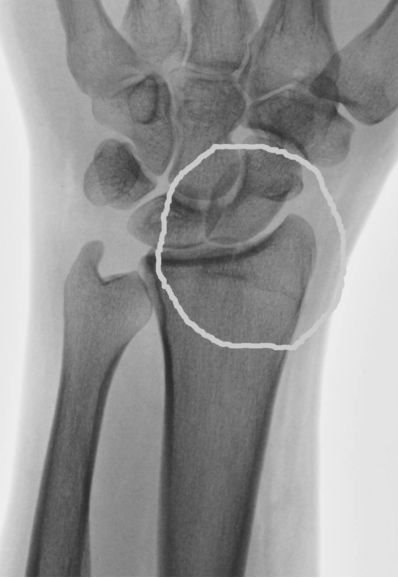
A rough day last friday (weather-wise)........
So I pull the truck over to wipe down the nearside mirrors (nice and responible eh?)
I'm wet, my boots are wet, as are my gloves...... I can reach most of the mirors, but have to use the step and mirror arm to reach the top mirror...wet gloves mean I can't keep hold of the mirror arm so slip off the step, landing in a puddle that happens to be concealing a piece of plastic (one of those clear plastic "document wallets" I think it was).
This ends with me going "arse over elbow" and landing on my hip and wrist (luckily my left one - being right handed).
It didn't hurt to start with, then after an hour or so, it was sore, so I take a couple of nurofen tablets, still believeing that is just a sprain, only to find that by lunchtime I can't change gears or work the handbrake of the truck, so off to the hospital, only to find, after "they've" taken an xray that I've broken the top part of my left radius a.k.a radial styloid (I think that's what they called it anyway).
Which means that if I want to do anything with a batch of brew larger than 1 gallon, it's out of the question for about the next 4 weeks!
Damn, damn, damn!
Sunday, October 18, 2009
Bottle Bombs.....a salutory lesson!
Last week, "erindoors" made some chutney (green tomato....) Part of the recipe included some root ginger.
Initially, she was gonna use a recipe from Mrs Beeton, but ended up using a James Martin recipe.
Anyway, there was some root ginger left over, so I collared it to make some ginger beer. I got the recipe from the net (one that I've used before) and it turned out that I had enough ginger for 10 litres.
So I mixed it up i.e. 2 x 2 litre bottles and 2 x 3 litre bottles. I then put it on top of the kitchen cupboards so I wouldn't get nagged about it taking up room in the kitchen.
Now normally, you'd wait about 24 hours for it to get to the stage where the bottles can't be pressed in and the plastic stays firm/hard, then you'd put it in the fridge. Whereas, because I'd put it on top of the cupboards, I remembered it at about 0600 on Wednesday morning.
Actually I noticed that the 2 x 2 litre bottles were starting to stretch under the internal pressure...... so I took the bottles down from the cupboards and put them on the floor in front of the fridge..... as I was picking up on 3 litre bottle, I knocked the other one over and it exploded.
So apart from some grazes and bruising on 1 hand and 1 shin, plus ginger beer all over the inside of the fridge, the outhouse (where the fridge is) and over both the cats that were eating their breakfast biscuits behind me (no injury or harm.... fortunately), oh and having been dazed by the explosion a bit, no harm was done.
I realise that I was lucky to be making the ginger beer in plastic bottles, because I'd have probably have suffered harm if it had been glass. But it also points out that to have exploded a plastic bottle like that, there must have been a hell of a lot of pressure built up inside.
I mean, the whole point of making ginger beer like this and then chilling it, is because you want to stop an active ferment with the cold of the fridge so that it carbonates the ginger beer, but doesn't ferment all the sugar so there's still plenty of sweetness left. But caution must be observed as this method has fundamental hazards to it, especially, if like me, you forget to get the bottles into the fridge soon enough.....
Apart from that, it makes a nice drink.......
TTFN
Initially, she was gonna use a recipe from Mrs Beeton, but ended up using a James Martin recipe.
Anyway, there was some root ginger left over, so I collared it to make some ginger beer. I got the recipe from the net (one that I've used before) and it turned out that I had enough ginger for 10 litres.
So I mixed it up i.e. 2 x 2 litre bottles and 2 x 3 litre bottles. I then put it on top of the kitchen cupboards so I wouldn't get nagged about it taking up room in the kitchen.
Now normally, you'd wait about 24 hours for it to get to the stage where the bottles can't be pressed in and the plastic stays firm/hard, then you'd put it in the fridge. Whereas, because I'd put it on top of the cupboards, I remembered it at about 0600 on Wednesday morning.
Actually I noticed that the 2 x 2 litre bottles were starting to stretch under the internal pressure...... so I took the bottles down from the cupboards and put them on the floor in front of the fridge..... as I was picking up on 3 litre bottle, I knocked the other one over and it exploded.
So apart from some grazes and bruising on 1 hand and 1 shin, plus ginger beer all over the inside of the fridge, the outhouse (where the fridge is) and over both the cats that were eating their breakfast biscuits behind me (no injury or harm.... fortunately), oh and having been dazed by the explosion a bit, no harm was done.
I realise that I was lucky to be making the ginger beer in plastic bottles, because I'd have probably have suffered harm if it had been glass. But it also points out that to have exploded a plastic bottle like that, there must have been a hell of a lot of pressure built up inside.
I mean, the whole point of making ginger beer like this and then chilling it, is because you want to stop an active ferment with the cold of the fridge so that it carbonates the ginger beer, but doesn't ferment all the sugar so there's still plenty of sweetness left. But caution must be observed as this method has fundamental hazards to it, especially, if like me, you forget to get the bottles into the fridge soon enough.....
Apart from that, it makes a nice drink.......
TTFN
Subscribe to:
Posts (Atom)